


Campaigns Don’t Build Businesses. Systems Do.
Most marketing organizations are built around campaigns.
Launch dates. Flight windows. Post-campaign reports.
A burst of activity—followed by silence.
Then it starts again.
On paper, it looks productive.
In reality, it rarely builds sustained growth.
The Problem With Campaign Thinking
Campaigns are designed to create moments.
A spike in awareness.
A lift in engagement.
A short-term increase in traffic or sales.
But once the campaign ends, so does the momentum.
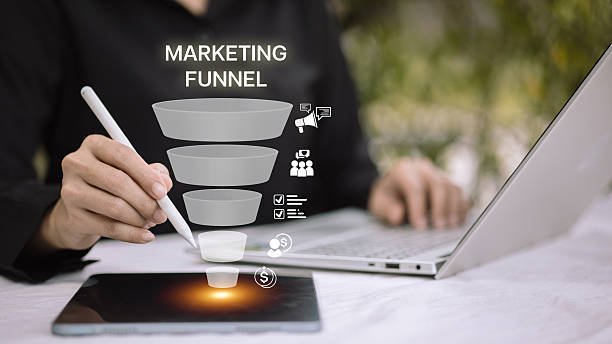
The Lie of “Full Funnel” Marketing
Everyone says they’re doing full funnel marketing. Very few actually are. Because what most brands call “full funnel” isn’t a connected system. It’s a collection of disconnected tactics, spread across teams, platforms, and partners, each optimizing for different outcomes.
On paper, it looks complete.
In practice, it doesn’t perform.
What “Full Funnel” Has Come to Mean
Cleaning Up Your Marketing Tech Stack: Why Systems Matter More Than Tools
Over the past decade, marketing teams have accumulated an unprecedented number of tools.
Analytics platforms. Social management tools. Influencer platforms. Attribution dashboards. Customer data platforms. Email automation systems. Media optimization software.

Aesthetics Gets Them In. Storytelling Keeps Them.
From a photographer's perspective, you feel it before you can explain it. There's a shot that's technically perfect. The exposure is right, the composition is clean, the light is doing exactly what you asked it to do. And it's still somehow dead-on arrival. Then there's the frame you almost didn't take, the one that's a little raw, a little honest, and it stops people cold

Evaluating an Influencer’s Engagement Quality Beyond Follower Count
When evaluating influencers for a campaign, it’s easy to focus solely on follower count. A large following can indicate potential reach, but it doesn’t necessarily reveal how well an influencer connects with their audience. To truly understand an influencer’s impact brands need to look deeper; beyond just the size of the audience and into the quality of engagement.

Red Note + Canada = A Perfect Match for Connecting with Chinese Canadians
If you work in marketing or content, you have probably heard rumblings about Red Note. It is the global version of Xiaohongshu which is already a giant in China, and it is now making its way steadily into the North American ecosystem. Red Note is known for blending the best parts of Instagram, TikTok, and Pinterest while staying rooted in authenticity and real user experiences.
From Awareness to Attribution: Why Brands Are Demanding Proof and How JONES Delivers It
For years, marketing was built on a simple premise: create awareness and trust that it would translate into growth.
Today, that premise is no longer enough.
CMOs and commercial leaders are under unprecedented pressure to connect every dollar of investment to measurable business impact. Awareness still matters, but it is no longer the finish line. It is only the starting point.

Closed-Loop Marketing: The Next Competitive Battleground
For years, marketing has been measured in fragments.
Awareness lived in one report.
Media performance in another.
Retail or sales impact somewhere else entirely.
Brands were forced to infer results instead of understanding them.
That model is breaking down.
Closed-loop marketing is becoming the next competitive battleground

Developing and Managing Your Brand’s Website in the Age of AI and Changing Consumer Expectations
Your website used to be a destination. Now, it’s an operating system.
It’s where trust is validated, decisions are supported, and increasingly, where AI systems decide whether your brand is worth surfacing at all. As consumer behaviour shifts and artificial intelligence reshapes how people search, discover, and evaluate brands, the role of a brand website has fundamentally changed.
Community Isn’t a Channel: Defining the Value of an Engaged Brand Community
Community is one of the most overused words in marketing and one of the most misunderstood.
Most brands say they want to “build community.” What they often mean is they want more followers, more engagement, or more loyalty. But community isn’t reach. It isn’t frequency, and it definitely isn’t just a comment section.

Influencer Marketing in Canada, Robin Ryan’s Strategic Outlook 2026
Influencer marketing in Canada has grown up a bit.
People aren’t looking to be impressed anymore. They want help making decisions. Creators are spreading trust across multiple platforms instead of relying on one. And brands are finally starting to plan around how people actually behave, not just where they post.
This is how I see 2026 shaping up.

Canadian Marketing Trends for 2026: Andrea Fernandes’ Strategic Outlook | JONES Collective
The Canadian marketing landscape is entering a reset year. Not an incremental shift, a structural one. Media, data, creator ecosystems, performance measurement, and customer expectations are all evolving at once.
2026 will reward organizations that stop thinking in channels, and start thinking in systems, signals, and outcomes.
At JONES Collective, we see five forces reshaping how brands, publishers, and agencies must operate to stay competitive in Canada and beyond.
This is what leaders should be planning for now.
Influencer Marketing in Canada: What Brands Should Really Be Valuing
Discover what brands should truly value in Canadian influencer marketing, from verified audiences and compliance to performance, retail impact, and scalability.
Deterministic Data vs Probabilistic Targeting: Why Retail Brands Are Demanding Proof, Not Predictions
Learn why deterministic shopper data is replacing probabilistic targeting, and how brands are using verified behaviour to drive measurable retail performance.

The Future of Retail Marketing: Why Retail Social Intelligence Will Replace Traditional Retail Media
Retail marketing is shifting fast. Discover why Retail Social Intelligence, powered by deterministic data, creator content, and paid social, will define the future of retail performance.

Breaking Down The Instagram Algorithm
The Instagram algorithm - it’s allusive, it’s confusing, and you hear EVERYONE in Marketing talking about it. But what is it actually… Well, for starters, the Instagram algorithm is forever changing, so it’s hard to pinpoint one solid definition and or formula. Essentially, the algorithm is a piece of code that determines what posts you see in your feed, how often you see certain accounts, and which ads get served to you within the platform. The algorithm determines what to serve you based on three primary factors: Interests, Timelessness, and Relationships.

Self-Image in the Age of COVID.
It’s hard to stay away from your own reflection these days. Video calling has become a daily occurrence for many, and we all have ample time at home to stare into the mirror and fixate on the person staring back.
In Ontario, we are approaching our fourth month of government mandated self-isolation. We are all feeling the impact of being cooped up indoors, especially with the summer weather tempting us outside. With no tangible end in sight, this freeze on our lives can start to take its toll on the way we think (or overthink) about our physical and mental selves.

2020 Influencer Marketing Trends
What is a micro-influencer? A micro-influencer is someone who has between 1,000 to 100,000 followers. Micro-influencers focus on a specific niche or area and are generally regarded as an industry expert or topic specialist.
2020 will see a rise in micro-influencers and not just in the traditional sense. This will include Peer-to-Peer (ie.‘Someone Like Me’) Influencers, Family & Friend Influencers as well as the Employee Influencer.
Data shows that brand content shared by employees get 8X more engagement than if it was shared by the brand’s social channels. Being an advocate and expert of a brand as an employee builds trust and is word-of-mouth marketing at its finest.

1, 2, 3 KPIs. Oh my!
…What to measure when creating an influencer marketing campaign.
Influencer Marketing is just like any other advertising medium in that there are many different metrics to consider when reviewing a post report but which one/s are the MOST important. We are often asked - how many clicks did the post get? What was the engagement rate? How many people viewed the video? Which post did the best organically?
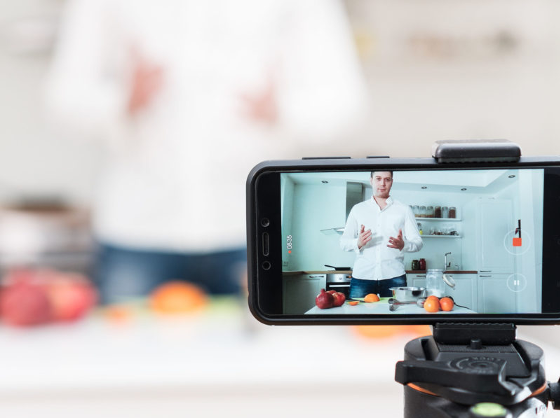
A Guide to Self-Producing at Home
With all of us still socially isolating at home, we’ve had to pivot away from the traditional ways of doing things, to embracing some new techniques. Production is one main area that has been affected, as it remains challenging, and at this point still unlikely, to gather a team to capture professionally produced content. User generated content, aka UGC, has taken over out of necessity, but as people get more comfortable self-producing, this style will continue to grow in popularity. In fact, UGC is often seen as more authentic, approachable, and in a sense, more honest, as brands communicate with their audiences more casually and without having to spend huge budgets.
But even though self-producing video content at home is super easy to do, it can be daunting if we’ve never done it before. So, we thought we’d offer a user-friendly guide on how-to set up a simple at-home studio, so you can feel confident in joining in on the fun!
What will you need for an at-home studio?